
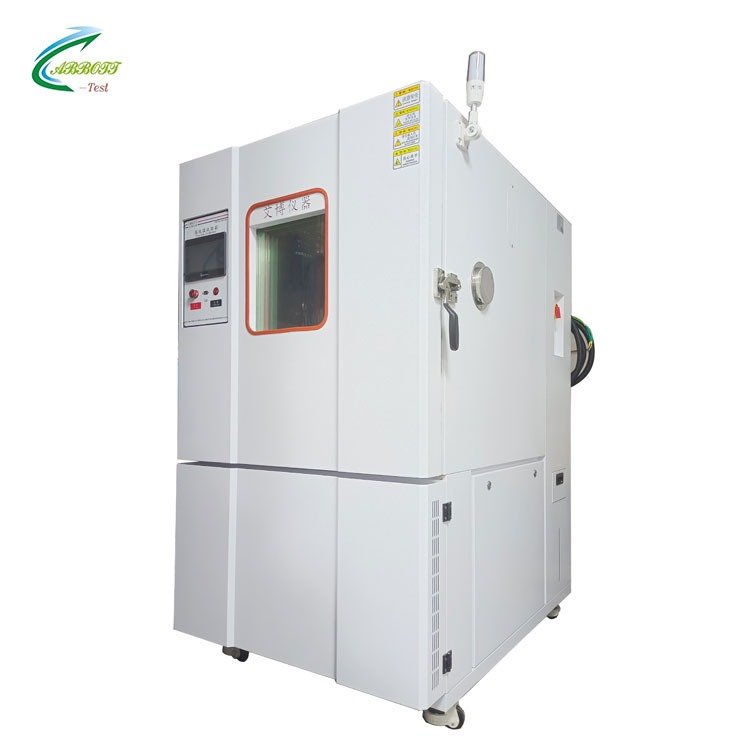
Corrosion resistant alternating salt spray test chambers are widely used to test the corrosion resistance of materials and surface coatings, so many industries are using corrosion resistant alternating salt spray test chambers to simulate the salt spray environment by exposing samples to salt spray for a period of time to evaluate their corrosion resistance. However, before carrying out the experiment, we must consider and control a number of factors, such as ambient temperature, humidity and atomizer spray speed. Only when the experimental parameters are accurately controlled, can we obtain accurate and reliable experimental results. Let's take a look at the factors that affect the experimental results of the corrosion resistance alternating salt spray test chamber.
temperature setting problem
The stability of temperature and humidity inside the corrosion resistant alternating salt spray test chamber is one of the key factors affecting the experimental results. If there is a problem with the temperature setting of its equipment, it will obviously have a great impact on the data tested. Because the salt spray test is carried out in a high temperature and high humidity environment, if the temperature and humidity inside the test chamber cannot be kept stable, it will lead to inaccurate experimental results. Therefore, the optimization of temperature and humidity control system should be considered in the design of the test chamber to ensure the stability of the test environment.
brine concentration problem
The concentration and acidity of salt water in the corrosion resistant alternating salt spray test chamber are also important factors affecting the experimental results. Different materials have different degrees of tolerance to salt water and acidic solution. The standard concentration of salt water should be 5%. If the concentration of salt water is too large, it will directly increase the corrosion degree of the neutral salt spray test chamber to the test product. Therefore, in the salt spray test, it is necessary to select the appropriate brine concentration and acidity according to the characteristics of the tested material and the requirements of the application environment.
the salt spray settlement problem
As the core index of corrosion resistance alternating salt spray test chamber, the standard of salt spray settlement is 1 ~ 2ml/80cm2*h. In our daily use process, we often encounter normal consumption, but the amount of settlement is very small. Once in this situation, we must first consider whether there is leakage of salt water. Then consider whether the nozzle is broken, whether the fog hopper is tilted, and whether the hose between the fog collector and the funnel is blocked. If the standard of salt spray settlement is not reached during the test, it will undoubtedly affect the test results. In this case, the total consumption of salt water in the experiment can be compared.
salt water pH
As we all know, after the standard salt water is configured in the corrosion resistance alternating salt spray test chamber, the PH value of the salt water should be between 6.5 and 7.2, which is neutral, but in fact, the purity of some salt is not very pure, or because of water quality problems, the PH value of the salt water we configured is not within the required range, which requires us to configure salt water. Once the PH of the salt water is higher than this standard, a few drops of hydrogen chloride can be added to neutralize it, if it is lower than this standard, some sodium hydroxide needs to be added to neutralize it until the PH value reaches the standard. If the pH of the salt water is not up to the standard, it will directly affect the results of the corrosion resistance alternating salt spray test chamber.
air flow system
In addition, the airflow flow in the corrosion resistant alternating salt spray test chamber will also affect the experimental results. The fully mixed air flow can evenly expose the surface of the test sample to the salt spray environment, thus accurately evaluating its corrosion resistance. Therefore, when designing the test chamber, it is necessary to consider the optimization of the air flow system to ensure the uniform distribution and fluidity of the air flow.
Internal materials
Finally, the selection of the internal material of the corrosion resistant alternating salt spray test chamber is also one of the important factors affecting the experimental results. The corrosion resistance of the material inside the test chamber needs to match the material being tested to avoid interference with the experimental results. Therefore, when selecting the test chamber material, it is necessary to consider its corrosion resistance and compatibility with the material being tested.
The factors that affect the test result of the corrosion resistant alternating salt spray test chamber are: the stability of the temperature and humidity inside the test chamber, the concentration and acidity of the brine, the flow of the air and the selection of the material of the test chamber. Only when these factors are fully considered and controlled can accurate and reliable experimental results be obtained.