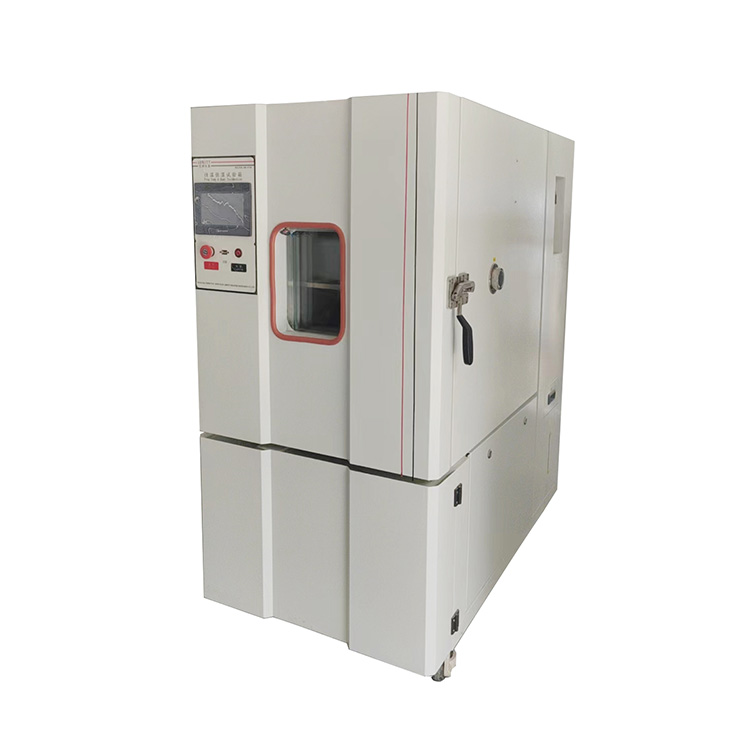
During the use of variable frequency constant temperature and humidity test chambers, some problems may arise due to improper usage methods or extended usage time. Today, taking the Aibo variable frequency constant temperature and humidity test chamber as an example, we will explain the factors that can cause the chamber to lose its cooling function.
One of the two major factors causing the variable frequency constant temperature and humidity test chamber to lose its cooling function:
Due to the test chamber’s inability to maintain temperature, we observed whether the refrigeration compressor could start during operation. The compressor could start during the operation of the environmental test equipment, indicating that the electrical wiring from the main power supply to the compressor was normal and there were no issues with the electrical system.
Since there were no issues with the electrical system, we checked the cooling system. Firstly, we examined the discharge and suction pressures of the low-temperature (R23) compressors of the two refrigeration units, which were lower than normal. The suction pressure was in a vacuum state, indicating that the refrigeration units were lacking refrigerant. Touching the discharge and suction pipes of the main unit’s R23 compressor revealed that the discharge pipe was not hot and the suction pipe was not cold (without frost), further suggesting a shortage of R23 refrigerant in the main unit.
The second of the two major factors causing the variable frequency constant temperature and humidity test chamber to lose its cooling function:
Without identifying the cause of the failure, we further investigated the issue based on the chamber’s control process. The test chamber is equipped with two refrigeration units: a primary unit and an auxiliary unit. During the rapid cooling phase, both units operate simultaneously. When the temperature stabilizes, the auxiliary unit stops while the primary unit maintains the stable temperature. If there is a leak in the primary unit’s R23 refrigerant, it will significantly reduce the cooling effect of the primary refrigeration unit. During the cooling process, as both units are operating simultaneously, there is no apparent temperature instability. However, the cooling rate decreases. During the temperature maintenance phase, once the auxiliary unit stops working, the primary unit loses its cooling effect, and the test air temperature gradually rises. When the temperature increases to a certain level, the control system activates the auxiliary unit to lower the temperature. Once the temperature drops to near the set value (55℃), the auxiliary unit stops working again, repeating this fault phenomenon.
So far, we have confirmed that the cause of the failure is a leak in the low-temperature (R23) refrigerant of the primary unit. To inspect the leak in the refrigeration system, we combined the use of a leak detector and soap water. We discovered a crack approximately 1cm long in the hot gas bypass valve. After replacing the solenoid valve, recharging the system with fluorine, and ensuring the normal operation of the system, the problem was resolved. The analysis and diagnosis of the fault phenomenon followed a logical progression from easy to difficult, from external to internal, and from electrical to refrigeration. Familiarity with the principles and working processes of the test chamber is essential for effective fault analysis.
For more information about the factors that can cause variable frequency constant temperature humidity test chamber to lose their cooling function, please follow Aibo Instruments!